

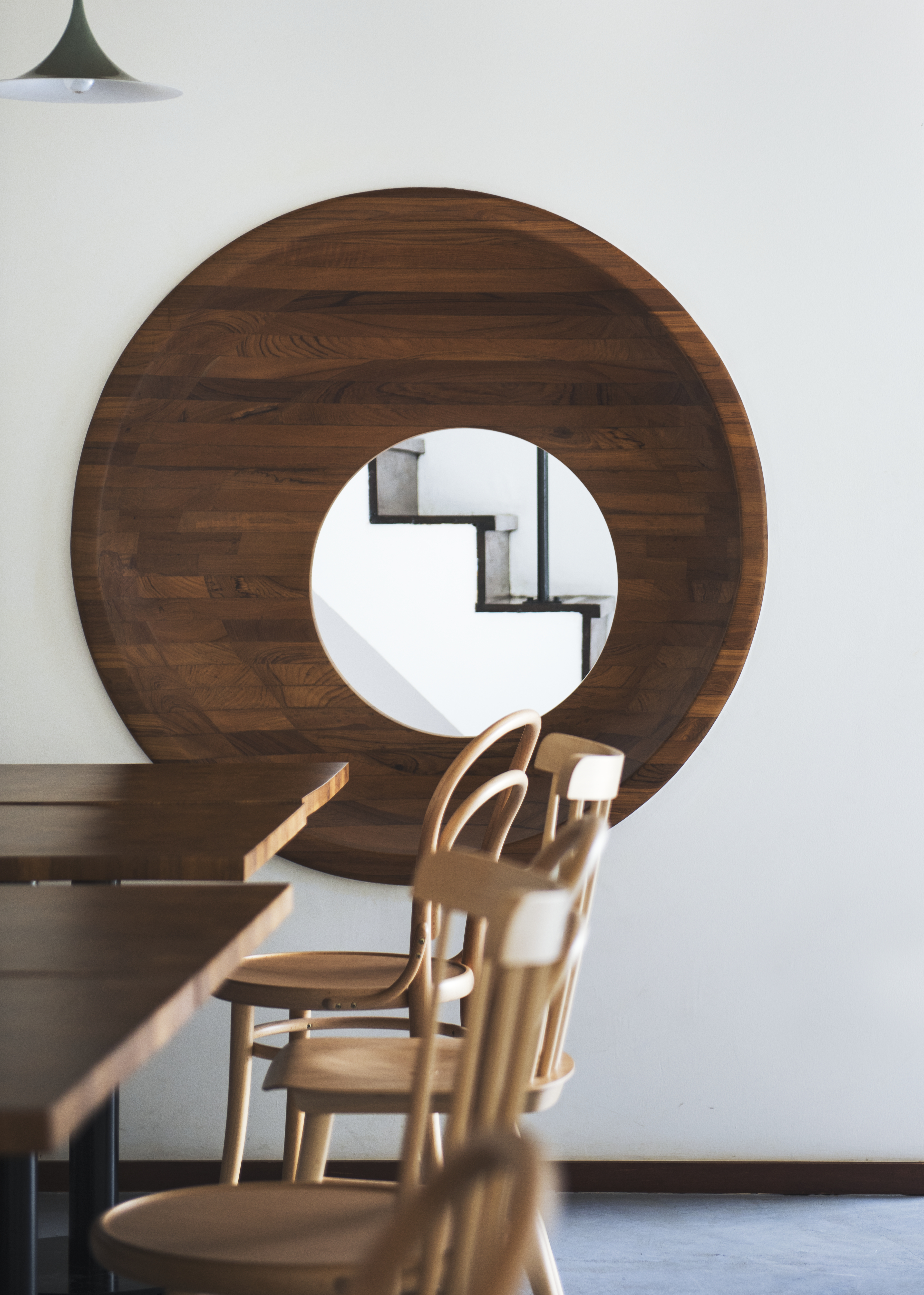
“Won’t this make the room look smaller?” It’s the question we hear most often when a customer walks up to a walnut table or a dark oak sideboard. For more than a decade, light woods, white and grey dominated Portuguese homes, and dark tones came to be associated with the heavy furniture of earlier generations.
In 2026, dark woods are back in decorating. But they’re back in a different form: in pieces with lighter lines, surrounded by light colours and with more attention to light. In this guide we explain why they’re returning, which woods exist, how to combine them and what you should know before buying, including the maintenance care that few shops mention.
Why dark woods are coming back
There are three reasons that keep recurring in this year’s trend analyses.
1. Fatigue with homes that all look the same. Light minimalism and the Scandinavian look have been repeated so often that many homes have ended up resembling one another. Magazines such as El Mueble point out that light oak is giving way to darker woods, such as walnut, precisely to give interiors more personality.
2. A search for warmer homes with natural materials. The trend many designers call “warm modernism” keeps the simple lines of contemporary design, but swaps the coldness of white for textured materials: wood with visible grain, stone, linen, wool, leather.
3. Appreciation for pieces that last. There is a growing preference for furniture with character and build quality, rather than disposable pieces. Dark wood, with its visible grain and a finish that ages well, fits that way of thinking.
The trend doesn’t stop at the living room: in kitchens, walnut and mid-tone woods are replacing all-white cabinets, and in bathrooms, wood-fronted units are gaining ground over lacquered ones.
Which dark woods exist (and how to tell them apart)
Walnut. The most sought after. It has a warm brown, somewhere between chocolate and caramel, with a well-marked grain and sometimes greyish or purplish highlights. It’s versatile: it works with light neutrals as well as with stronger colours.
Smoked oak. Oak treated with fumes, which darkens the wood through a reaction with its natural tannins. The result varies a lot from piece to piece, from honey brown to almost black, which is part of its charm. It keeps the open grain of oak.
Darkened or stained oak. Oak with a coloured finish (varnish or pigmented oil). It allows dark tones at a more accessible cost than walnut.
Wenge. A very hard, dense African wood, very dark brown with almost black stripes. It is the most intense and calls for small doses.
Black ash and black-lacquered woods. They keep the texture of the grain, but in black. Great for adding contrast in small pieces: a stool, a lamp, a frame.
Summary: dark woods side by side
| Wood | Colour and grain | Dent resistance | Reaction to sun | Where it works best |
|---|---|---|---|---|
| Walnut | Light brown to chocolate, with a marked grain | Medium | Tends to lighten to more golden tones | Dining tables, sideboards, TV units, headboards |
| Smoked oak | From honey brown to almost black, varies from piece to piece | Medium-high | Stable | Tables, chairs and shelving with simple lines |
| Stained oak | Uniform tone, defined by the finish | Medium-high | Depends on the finish | Anyone who wants a dark tone at a more accessible price |
| Wenge | Very dark brown with almost black stripes | Very high | May lighten | Statement pieces and details, in small doses |
It’s normal for the same piece to have lighter and darker areas: the wood closer to the bark is lighter and the wood at the centre of the trunk is darker. With smoked oak, the tone also varies from batch to batch. Every piece is unique, so photographs are always indicative.
Solid wood, wood veneer or wood effect?
In the shop, this is one of the most frequent questions, and it’s worth understanding the difference before comparing prices.
- Solid wood: the piece is made entirely of wood. It is heavier and more expensive, but can be sanded and renewed several times over the years.
- Wood veneer: a thin sheet of real wood glued onto a panel (MDF or plywood). It has the look and feel of real wood, is lighter and more stable on large surfaces, such as table tops or furniture doors, and is more affordable. It can’t be sanded as many times as solid wood.
- Wood effect (melamine or printed paper): imitates wood with an image. It is the most economical option and easy to clean, but it lacks the feel and depth of real grain.
None is “the wrong one”: it depends on use, budget and how long you want to keep the piece. On each product’s page we always state the material and, in the shop, you can see and touch the differences side by side.
And the FSC label? On some pieces you will find the FSC acronym (Forest Stewardship Council). It means the wood comes from responsibly managed forests and that the whole journey, from forest to shop, is verified by independent auditors. There are three types of label: FSC 100% (all the wood comes from certified forests), FSC Mix (a mix of certified, recycled and controlled wood) and FSC Recycled (reclaimed wood). If this criterion matters to you, ask us which pieces have it.
Which wall colours go with dark wood
The wall is the largest backdrop in the room, so it decides whether dark wood looks cosy or heavy.
- Warm white and cream: the safest choice. They bring light and let the wood stand out. Prefer whites with a yellowish or pinkish base over bluish whites, which can look cold next to warm wood.
- Beige, sand and greige (between grey and beige): they create a calm whole, with less contrast.
- Sage green: a soft, greyish green that naturally goes with walnut, because both bring nature to mind.
- Terracotta and clay tones: they add warmth, but call for a room with good natural light.
- Dark walls (bottle green, brown, deep blue): possible, but only in large, well-lit rooms, with light textiles to balance.
Before painting, test a sample on the wall itself and look at it in the morning and in the evening: light changes a lot about how colour and wood relate.
Four combinations that work
1. Dark wood and light stone. A walnut sideboard with a marble, travertine or light stone top or accessories creates contrast without feeling heavy. The stone gives back the light that the wood absorbs.
2. Dark wood and natural textiles. Linen, wool, cotton and bouclé in sand, beige or warm white tones soften the wood. A light sofa with a dark coffee table is one of the easiest combinations to get right.
3. Dark wood and wine, terracotta or rust tones. Cushions, throws, an armchair or a curtain in these colours go with the brown and warm up the room, especially in autumn and winter.
4. Dark wood and metal. Handles, legs or lamps in brass or brushed gold stand out against a dark background. In more sober settings, matt black also works.
Light makes all the difference
Dark wood absorbs light. That is why the same piece can look cosy in one room and heavy in another. The difference almost always lies in the lighting.
- Use warm light: bulbs between 2700 K and 3000 K (shown on the packaging) bring out the tones of the wood. Cool light (4000 K or more) tends to turn walnut greyish and make the room feel harsher.
- Keep the same colour temperature throughout the room: mixing warm and cool bulbs in the same space is one of the most common mistakes.
- Create layers of light: instead of relying only on the ceiling light, add a floor lamp, a table lamp and, if possible, accent lighting on a shelf or a piece of furniture. A practical rule is to have at least three light points in a living room.
- Make the most of natural light: place the larger dark pieces in the rooms with more windows, keep windows unobstructed and use light curtains in pale tones.
- Mirrors: a mirror opposite or beside a window reflects light and helps balance a dark piece.
How to mix dark woods with other woods
You rarely buy all your furniture at once, so it’s normal to have different woods at home. Mixing them well gives a more considered look than having everything identical.
- Choose a main wood. Usually it’s the floor or the largest piece. The others adjust to it.
- Use contrast, not near-matches. Walnut with a light oak works well. Two very similar but different brown woods look like a buying mistake.
- Up to three tones per room: a light, a medium and a dark one. A rule some designers use is 60-30-10: about 60% of the wood in a main tone, 30% in a second and 10% in an accent tone.
- Repeat each tone at least twice. If the coffee table is walnut, repeat the walnut in a frame, a stool or the base of a lamp. That way the piece doesn’t stand alone.
- Mind the undertones. Woods have warm (yellowish, reddish) or cool (greyish) undertones. Mixing a cool grey floor with a warm-toned table can clash. If that is the case, a rug between the two helps separate them.
How to use it in each room
Dining room. It is the most natural place to start. A walnut table with chairs upholstered in a light fabric or with rattan seats balances the set. A pendant light with warm light over the table brings out the grain. If the room is small, a round table takes up less visual space.
In our shop, the Peniche Dining Table and the Nazaré Dining Table are available with a wood veneer finish and can be paired with the Peniche Sideboard or the Nazaré Sideboard, in the same finishes.
Living room. Instead of furnishing everything in dark, choose one or two statement pieces: the TV unit, the bookcase or the coffee table. The walls, sofa and rug stay in light tones. On a dark bookcase, interior lighting highlights the objects and the grain of the wood.
Bedroom. A bed, headboard or bedside tables in dark wood with light bedding make the bedroom cosier. With warm tones around and low ambient light, the effect is calm rather than gloomy.
The Tomar Bed and the Tomar Chest of Drawers are available entirely in wood veneer, and the bed can have warm LED lighting (3000 K), which brings out the grain.
Entrance hall. A dark console table with a large mirror above gives the entrance presence and reflects light, without taking up space.
The Alvor Console, 150 cm wide, has a premium version with a wood veneer top. On all these pieces, the wood and the colour of the finish are chosen with us in the shop, where you can see the samples in person.
Home office. A dark wood desk gives weight and focus to the workspace. Here the task light can be a little more neutral (around 3000–4000 K), as long as the rest of the room’s lighting is consistent.
Kitchen and bathroom. For those who are renovating, cabinet fronts in walnut or dark oak are an alternative to white. In these rooms, always confirm that the finish is suitable for damp areas.
Common mistakes to avoid
- Furnishing the whole room in the same dark tone. Too many dark pieces, all alike, make the space heavy. Combine with light ones.
- Combining dark furniture, a dark floor and dark walls in a room with little light. If the floor is already dark, opt for a light rug under the piece.
- Choosing solid, bulky pieces for small spaces. Prefer slim profiles and visible legs, which show the floor and make the piece feel lighter.
- Ignoring the light. A single cool ceiling light is the worst scenario for dark wood.
- Deciding from the photograph alone. The same wood changes a lot with the light and the screen. Whenever possible, see the sample in person.
An honest note on maintenance
Dark surfaces show more dust, fingerprints and light-coloured pet hair than light woods, especially in glossy finishes. Deeper scratches on a stained piece can also reveal the light wood underneath. None of this is a reason to give up, but it helps you choose well:
- Prefer matt or satin finishes, which hide dust and marks better than glossy ones.
- Dust with a soft, slightly damp cloth in the direction of the grain, and dry straight afterwards. Avoid abrasive products.
- Use coasters, placemats and felt pads on the feet of objects and chairs.
- Protect from direct sunlight. Contrary to what many think, walnut tends to lighten in the sun over time, and so does wenge. Curtains or blinds during the sunniest hours help keep the tone.
- Keep the humidity of the house stable, away from radiators and direct heat sources, to avoid cracks and warping.
Oil or varnish? Pieces with an oil finish benefit from a new coat of the proper oil about once a year and allow small marks to be repaired. Varnished or lacquered pieces only need cleaning, but a scratch in the varnish is harder to repair. Always ask which finish the piece you are choosing has.
Why has my table changed colour? Light can darken light woods and lighten dark woods. If an object always stays in the same spot on a walnut table by a window, after a few years its mark may become noticeable, darker than the rest of the top. Moving objects around from time to time and filtering direct sun avoids this difference.
Frequently asked questions
My living room is small. Can I use dark wood?
You can. The rule is proportion: one or two dark pieces in a space with light walls, floor and textiles. Choose pieces with visible legs and slim lines, and make sure the lighting is good.
What if the room has little natural light?
Make up for it with several warm light points (2700–3000 K), light walls and a mirror reflecting the window. Avoid combining dark wood with dark walls in these rooms.
Can I put dark furniture on a light floor?
Yes, and it usually works very well. The contrast between a light floor and dark furniture is easier to manage than two similar wood tones.
And on a dark floor?
It’s also possible, but it’s best to separate them with a light rug and choose light walls and textiles so the space doesn’t feel weighed down.
Is dark wood a passing fad?
Trends change, but well-finished wood goes well with many phases of a home. If you’re hesitant, start with a smaller piece (a side table, a frame, a stool) before investing in a dining table or a wardrobe.
Do dark pieces scratch more easily?
They don’t scratch more, but scratches and dust are more noticeable. A matt finish, felt pads on the feet and a few simple precautions make a big difference.
Before choosing, see the whole picture
A dark wood changes a lot depending on the light, the floor and the colours around it. So, more than choosing an isolated piece, it’s worth understanding how it looks in your space.
At Giestas we help with that choice. You can visit our shop in Valongo to see the finishes in person and compare woods side by side, or ask us for a 3D project to see your room before deciding. If you have any questions, talk to us. Choosing can be simple.