

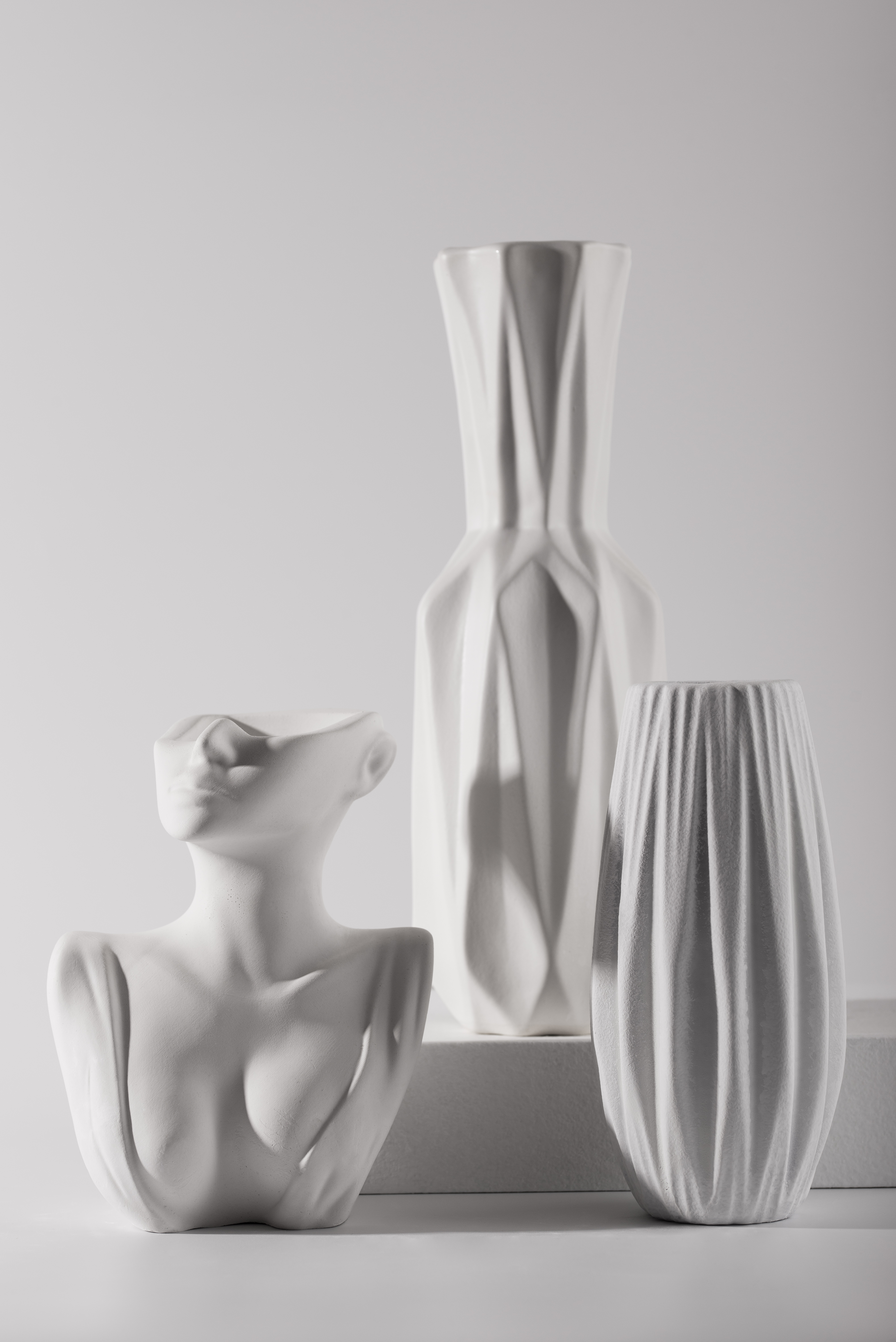
There are rooms that seem complete but are missing something. It isn’t a piece of furniture, it isn’t colour, it isn’t light. It is presence. Well-chosen decorative sculptures solve that: they organise the eye, anchor the room and give identity to an interior that before seemed merely furnished. The difference between a piece that “decorates” and one that truly transforms lies in the criteria of whoever chooses, and those criteria begin with understanding style, scale, material and budget.
In a curated shop, the selection of crystal, agate and marble figures is made not by volume but by aesthetic coherence: each piece needs a reason to exist in the setting where it will live. It is this logic that this guide follows, guiding you through style, material, proportion, price and the best places to buy decorative sculptures in Portugal.
The styles and materials dominating interiors in 2026
From minimalism to organic forms: find your style
Three major aesthetic axes dominate residential interiors in Portugal this year. Expressive minimalism works with clean lines, a neutral palette and pieces with character but without excess. The abstract and geometric favours non-figurative forms of strong architectural impact, often in brushed metal or stone. The organic and biophilic draws inspiration from nature, with flowing curves, controlled asymmetries and materials that feel alive to the touch, a trend that has gained considerable ground since the middle of the decade.
The choice should always start from the existing setting, never from the isolated piece. An abstract sculpture in brushed steel looks extraordinary in a contemporary living room with hard lines; an organic figure in handcrafted ceramic warms a more intimate interior without overloading it. Asking “what does this room need?” is always more useful than asking “what do I like?”.
Ceramic, metal, marble and wood: what each material offers
Each material speaks a different language. Handcrafted ceramic has a warm texture and a controlled imperfection that conveys authenticity; it works very well in bedrooms and entrances, where the scale is more human and the setting calls for comfort. Metal, especially bronze, brass and stainless steel, brings durability and a restrained shine that fits naturally into modern living rooms. Textured wood adds organic quality and warmth without competing with other elements.
Marble has a visual weight few materials can match: a white marble piece on a sideboard is enough to set the tone of the entire room. Crystal sculptures and decorative objects in natural agate are often effective at catching light and creating depth, working as points of interest even in compact interiors. At Giestas Mobiliário you will find pieces of this kind, selected with attention to the presence they create in real context.
How to choose decorative sculptures for each room
The rule of thirds applied to sideboards and shelves
There is a simple way to ensure visual balance: the main piece should take up about a third of the width of the furniture it sits on. On a 120 cm sideboard, for example, a sculpture 30 to 48 cm wide keeps proportion without dominating the setting. For statement pieces on living room sideboards, interior design specialists recommend heights between 20 and 45 cm, enough to create a focal point without competing with the room’s architecture.
The most frequent mistake is choosing a piece that is too small, which gets visually lost among other objects, or too large, which oppresses the setting. A small piece on a wide surface doesn’t decorate: it disappears, whereas a disproportionate piece doesn’t surprise, it disturbs. Proportion is the most objective and most ignored criterion when buying.
Small spaces and entrance hall: scale with intention
In more compact interiors, the solution is to go for tabletop or shelf decorative objects between 25 and 50 cm, positioned so as to preserve circulation. Floor sculptures rarely work in small rooms: they take up usable area and make the room look even smaller. Verticality is an ally in these contexts: a tall, narrow piece takes up little horizontal space but creates visual movement.
In the entrance hall, the piece should be immediately visible on entering, but never block the way. A console with a medium-sized sculpture is the most balanced solution: it defines the space, creates a first impression and leaves circulation free. Before buying, use masking tape to simulate the approximate size of the piece on the floor or the wall and observe the result from a distance, a simple trick that avoids many wrong decisions.
Where to place the sculpture for maximum impact
Entrance hall: the first impression that sets the tone of the home
The hall is the most strategic space for a decorative piece with a sculptural background. It is where the visitor forms a first impression and where the resident unwinds on arriving home. A sculpture well positioned here doesn’t need to be large: it needs to be right. The ideal placement height is at eye level or slightly below, on a console or low sideboard, where the piece can be viewed from the front without effort.
Pieces with rich texture, those that work agate, marble or crystal, have an additional impact in this context: they invite touch and close observation, creating a sensory experience that goes beyond the visual. It is a way of communicating, right at the entrance, that this home has identity.
Living room and other rooms: creating focal points with intention
Each room should have an element that organises the eye. The sculpture can be that element: on a mantelpiece, in a built-in niche or on a coffee table. The concept of a focal point is not hard to apply: just make sure there is an object that draws the eye on entering the room and that the other elements are organised around it without competing.
In the composition, a sculpture should be neither completely isolated nor buried among other objects. A common practice in interior design is to combine pieces of different heights: the sculpture as the tallest element, accompanied by a medium-scale object and a lower one. In the dining room and the bedroom, smaller statuettes work as the finishing touch without overloading the setting, adding personality in the details.
Price ranges in Portugal and what to expect at each value
What a sculpture in ceramic, wood and metal costs
The Portuguese market offers decorative sculptures for every budget. In ceramic, the most affordable pieces start between 12 and 80 euros for small formats; more elaborate or larger works are between 80 and 150 euros, rising above that for signed handcrafted ceramic. In wood, most decorative sculptures fall between 15 and 100 euros, reaching 100 to 180 euros in larger formats or in combinations of materials.
For metal sculptures, smaller objects are typically between 15 and 100 euros, while larger-scale contemporary pieces can reach 200 euros or more. The price reflects the material, but also the manufacturing process: an industrial piece and a handcrafted piece can have similar dimensions and very different prices, justified by the work involved and the exclusivity of the result.
When it is worth investing in a higher-value piece
Pieces in marble, crystal, agate or bronze have a characteristic that sets them apart from occasional pieces: they don’t age with trends. They withstand changes of decor and keep working in different contexts over the years. An investment of between 150 and 500 euros in a standout decorative sculpture, whether for the living room or the entrance, is a long-term bet, not a seasonal expense.
The most balanced strategy is to invest more in the main piece of each room and complement it with more affordable decorative figures in the details. A crystal or agate sculpture as the living room’s focal point, accompanied by two or three ceramic statuettes as secondary elements, creates visual coherence without requiring a disproportionate budget. What matters is that the main piece has the presence needed to anchor the setting.
Where to buy decorative sculptures in Portugal: the best options
Curated shops and pieces you won’t find everywhere
Giestas Mobiliário is a reference for those looking for decorative sculptures selected with aesthetic criteria, with a physical presence and an online shop delivering across the whole country. The catalogue includes sculptures in crystal, agate, marble and selected handcrafts. One of the advantages of the physical shop is the chance to see and touch the pieces before deciding, something particularly relevant when dealing with objects with texture and noble materials, since photography does not always convey the real experience of a crystal sculpture or a decorative ceramic object with a handcrafted finish.
The right piece exists: you just have to know how to look
Choosing decorative sculptures is not complicated when you have criteria: a style aligned with the setting, the correct scale in relation to the furniture, a material suited to the interior and a budget set before you start looking. With those four points clear, the decision simplifies considerably.
The Portuguese market today has sculptures for decoration for every taste and price range, from handcrafted ceramic statuettes to investment pieces in noble materials such as marble, agate and crystal. Quality and exclusivity exist; you just have to know where to look. The big chains offer volume; curated shops offer identity.
If you want to discover decorative sculptures you won’t find in the big chains, visit Giestas Mobiliário in the physical shop or explore the online shop with delivery across the whole country. The Giestas Mobiliário team is available to guide your choice, whether for a living room anchor sculpture, a gift piece or the finishing touch your entrance hall still lacks.