

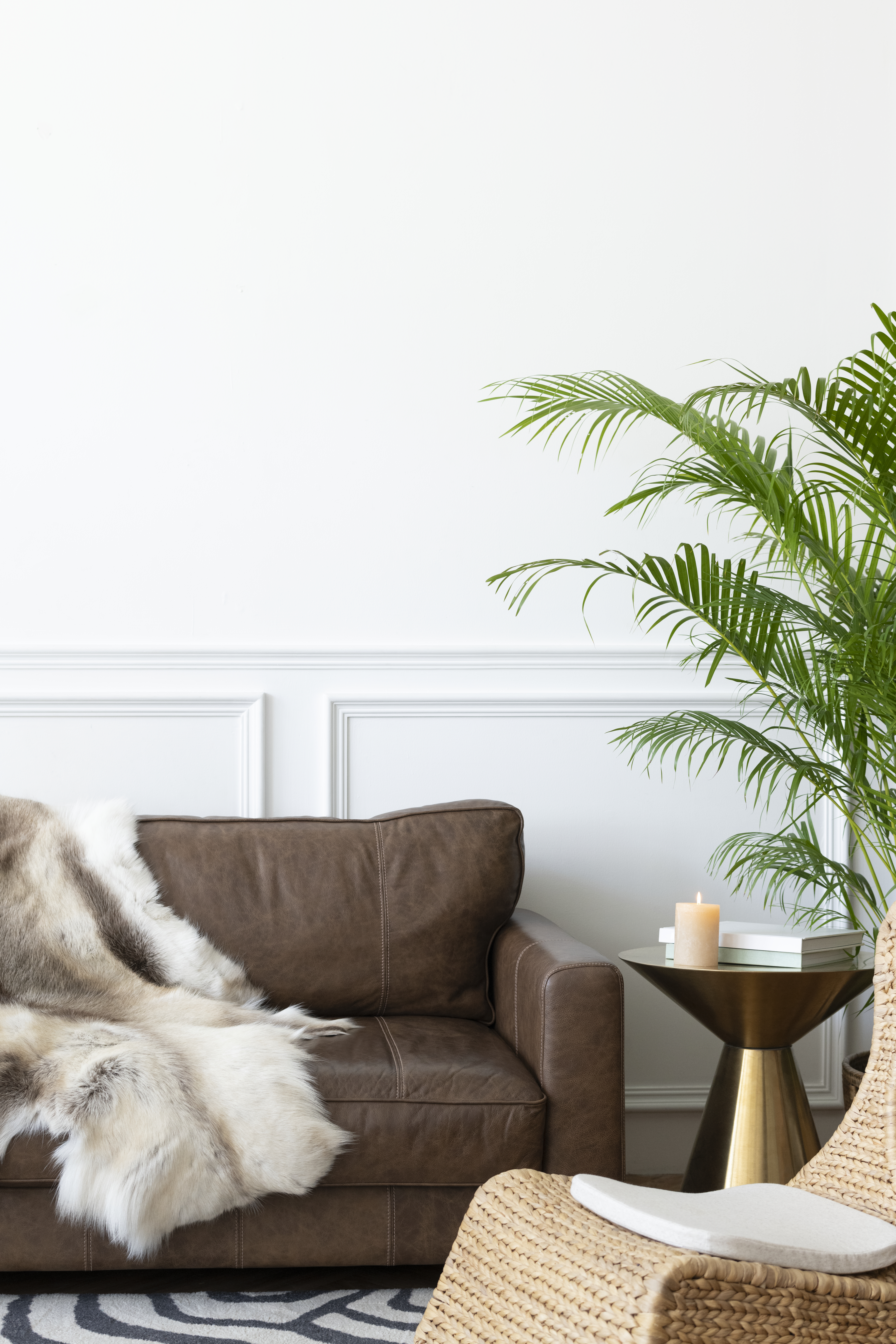
Walking into a room that seems thought out to the last detail is a feeling you recognise at once. There is balance, there is comfort, there is a common thread linking every element. Walking into a room put together without criteria is also recognisable: disproportionate furniture, harsh lighting, decorative pieces unrelated to one another. The difference is rarely the budget; it is the decisions.
Good living room decor means making the right decisions in the right order: first the colour, then the furniture, then the light, and only then the details that give a space character. This guide goes through six areas in a practical way: colour palette, furniture layout, lighting, decorative pieces, textiles and storage. At the end, you have a concrete plan to transform your living room, regardless of floor area or budget.
Living room decor: choose the colour palette before buying any furniture
Colour sets the emotional tone of a room before any furniture comes through the door. In 2026, the Portuguese market confirms the commitment to warm neutrals: beige, sand, warm off-white, taupe. They appear combined with earthy tones such as terracotta, clay, caramel and ochre, which bring warmth without overloading. Natural greens — sage, eucalyptus and olive green — complete these bases with an organic, serene presence.
The logic of an effective palette follows the three-tone rule: a neutral background on the walls, a main colour on the sofa or rug and an accent colour in cushions, lamps or decorative pieces. A combination widely used in modern Portuguese living rooms is a warm off-white wall, a sage green sofa and touches of terracotta or brass. It works because each tone has its own space without competing with the others.
Before painting, test physical samples on the wall and observe them at different times of day — it is a practice recommended by decorators and paint manufacturers precisely because the natural light of morning and the artificial light of evening significantly change how any colour reads. Materials also change perception: natural wood, linen and ceramic turn a neutral tone into something completely different, without needing to change a drop of paint.
Furniture layout for living room decor: the measurements that change everything
The most common mistake in small living rooms is not having too little furniture; it is having disproportionate or poorly positioned furniture. Before placing any piece, define the circulation paths: 60 cm is the absolute minimum, but 75 to 90 cm ensure a comfortable passage. These spaces aren’t wasted; they are what makes a room breathe.
In narrow or small living rooms, the sofa against the longest wall frees up the centre of the room and creates a feeling of more space. The L-shaped sofa is a good option when you want to maximise seating without accumulating pieces, and works especially well in corners that would otherwise go unused. Two small sofas facing each other work well in medium-sized living rooms, creating a balanced conversation area.
As for distances, 40 to 50 cm between the sofa and the coffee table is the measurement that balances functionality and comfort. The ideal distance between the screen and the seats is between 180 and 300 cm, depending on the size of the room. An important note about the coffee table: the most frequent mistake is not choosing it badly, it is choosing it too small. A table out of proportion with the sofa “floats” in the space and unbalances everything else. Low and wall-hung furniture increases the feeling of spaciousness without sacrificing functionality, an option with great visual impact that requires no building work or major intervention.
Layered lighting for a room with soul
A living room with a single ceiling light source always feels somewhat unfinished. Layered lighting solves this simply: general light to cover the room, task light for reading areas and more intimate seating, and accent light to highlight textures, pictures and decorative pieces.
General light can come from a ceiling fitting, a pendant with a diffuser or recessed spotlights. Task light comes from shaded lamps, table lamps and floor lamps positioned beside armchairs or reading areas. Accent light uses adjustable spotlights or LED strips in niches and shelves to create visual depth. The recommended colour temperature for the living room is between 2700K and 3000K: warm light that invites relaxation without making the room feel heavy.
A well-chosen floor lamp transforms a corner with no building work and little investment. Positioned behind an armchair or at a feature angle, it adds a layer of light and composition that no ceiling light can replicate. Lighting should be planned before furnishing, not after: it is much easier to plan for sockets and light points than to remedy with extension leads in plain view.
The decorative pieces that define the character of the space
Why the right piece is worth more than ten mediocre ones
Curation instead of accumulation is a principle that transforms any living room. When every object has intention, the space breathes. When every surface is filled, the room tires. The most effective strategy is to identify an anchor piece: a sculpture with strong presence, a large vase or a painting with character. The rest of the decor is built around that anchor piece.
The materials that work best in 2026 include natural stone, ceramic, marble and wood with matt finishes — materials with texture and authenticity that age well and never look dated. Giestas Mobiliário, with a physical presence and an online shop, has a selection that covers precisely this kind of curated piece: objects with their own character that stand out from what is found in superstores. Very often it is precisely that — a single piece with intention — that changes how everything else reads.
How to arrange decorative objects without creating visual clutter
The odd-number grouping rule is simple and effective: three or five objects of different heights create more dynamism than a row of identical pieces. A tall vase, a medium sculpture and a small handcrafted tray on top of a sideboard communicate with one another without repeating themselves. Negative space — the areas deliberately left free on shelves and surfaces — enhances what is on display as much as the pieces themselves.
An easy way to refresh the room without a new purchase is to rotate pieces seasonally between rooms. A jar that was in the living room can work just as well in the bedroom during winter, and vice versa. This rotation keeps the living room reading as current without requiring additional investment, a technique advocated by decorators as a practical alternative to constant consumption.
Textiles and rugs: the finishing touch that transforms living room decor
The rug is one of the decorative elements with the greatest impact and also the most frequently wrongly sized. The classic mistake is a rug that is too small, “floating” in the centre of the room without anchoring anything. The practical rule is that the front legs of the sofa should rest on the rug. For a small living room, a 160 x 230 cm rug is a versatile choice. For a medium room with more furniture, 200 x 250 cm or 240 x 300 cm integrate the conversation area better.
In terms of materials, jute, wool and woven cotton reinforce the cosy style of current trends and have the advantage of ageing gracefully. Cushions should be limited to two or three patterns within the same colour palette: when there are too many patterns, the visual confusion cancels out any decorative effect. A throw folded over the sofa or kept in a wicker basket adds texture and comfort without taking up space.
Curtains play a direct role in the perceived height of the room. Hanging the rod closer to the ceiling, regardless of where the window ends, visually lengthens the space considerably — it is one of the most recommended practices in interior decorating to visually enlarge any room. For windows with unusual dimensions, made-to-measure curtains are the most effective solution: they avoid wrong lengths that cut the verticality and give a distinctly more polished finish.
Smart storage without sacrificing style
In a well-decorated living room, storage isn’t visible. It is integrated into the furniture, hidden behind doors or disguised in decorative baskets. The key is to choose pieces that solve two problems at once: a storage-chest sofa holds throws and extra cushions without taking up additional area. A pouf with a compartment works as a seat, a footrest and storage all at once. A coffee table with a drawer or lower shelf stores remotes, magazines and frequently used items without exposing the clutter of daily life.
Floating shelves free up the floor and add verticality to the space, two very useful effects in small living rooms. A narrow sideboard on the side wall can replace a bulky TV unit, keeping the same function with far less visual presence. The organising principle is straightforward: what has decorative value deserves to be on view; the rest finds its place out of sight.
A clear plan to start decorating your living room today
Decorating the living room with style doesn’t require a total renovation. Most of the time, a rearrangement of the existing furniture, a coherent colour palette and two or three pieces with intention already transform how the space reads. The six areas of this guide — colour, layout, light, anchor pieces, textiles and storage — work as a concrete checklist. Tackle one at a time, in the order presented here, and the result builds up visibly.
For those who want to find pieces with their own identity without wasting time in superstores with no curation, Giestas Mobiliário is available in the physical shop and online. Talk to our team or visit us to find the element your living room was missing, and start with the living room decor you have always imagined having.